
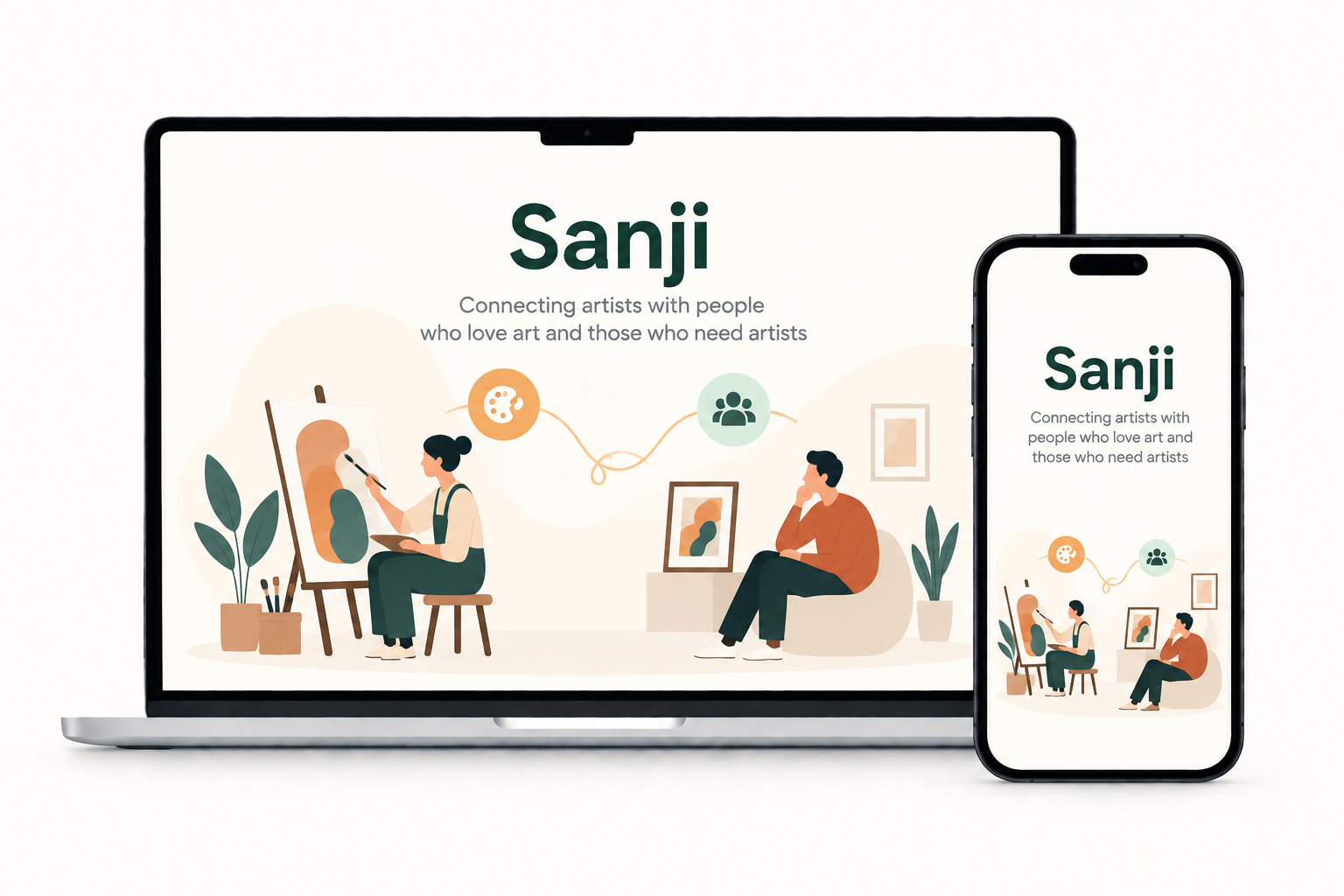
Sanji
A platform putting artists in front of the people who want their work. Still being built, with preregistration open, which changes what matters most almost every week.
On Sanji we are both the studio and the client, and that is harder than it sounds. There is nobody to send a scope change to. That sounds freeing until you notice it also means nobody is forcing a decision. We set our own dates on this one, and we have moved them.
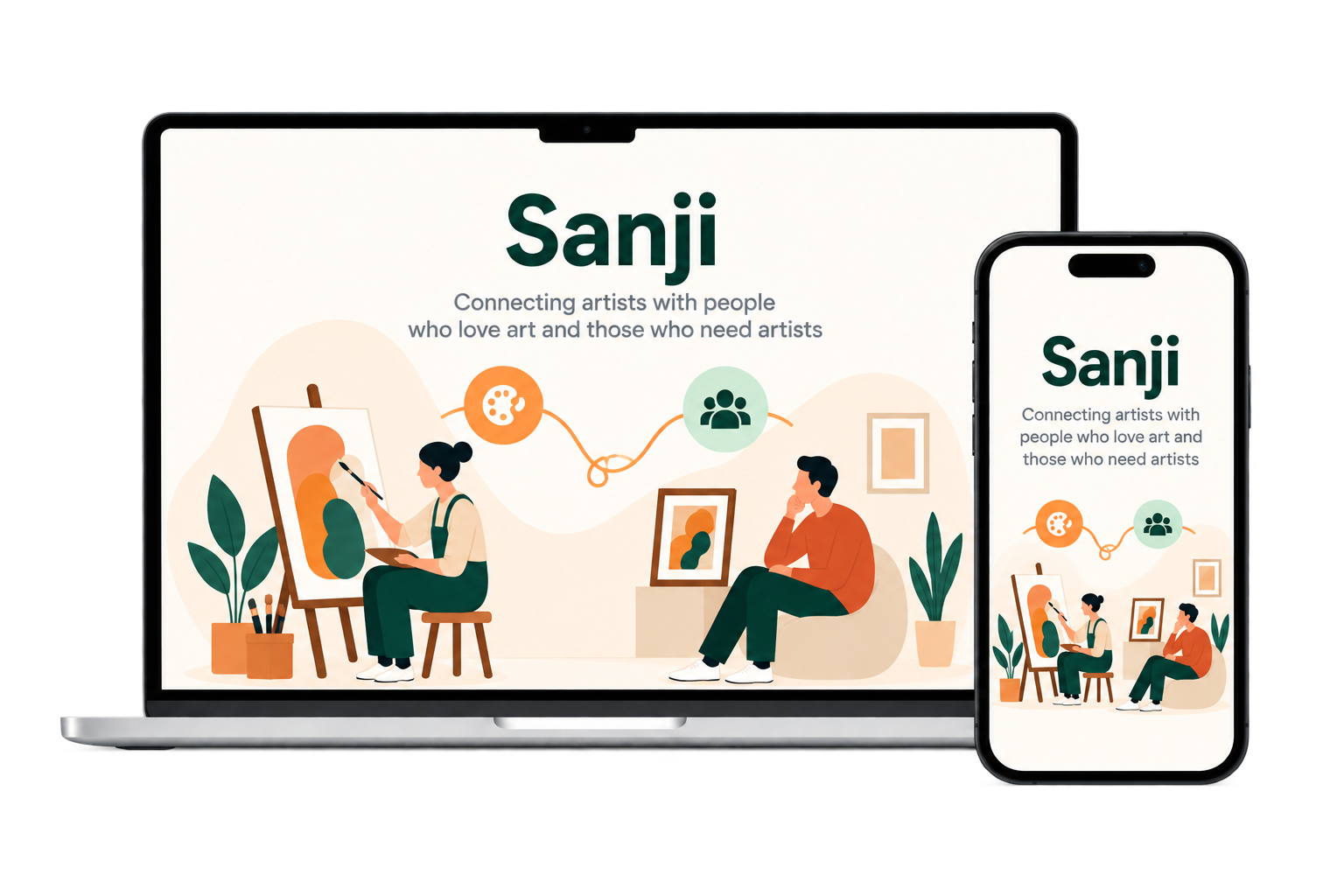
Preregistration opened before the product was finished, deliberately.
It means we prioritise against people who actually signed up rather than a guess about who might want this. It also means we owe those people a launch, which is the useful kind of pressure to be under.
A client build gets that pressure for free, in the form of a date and an invoice. Doing it to ourselves was the only way to find out what we do without one.
The hard part was never the marketplace. It is trust between two strangers over a commission.
The problem
An artist with a following still has no straightforward way to take a commission. The conversation starts on social media, the brief lives in a chat thread, the money moves somewhere else entirely, and nobody ends up holding a record of what was agreed.
When that goes wrong it goes wrong at the end, over a piece that is already finished. Sanji exists to put those four things in one place before that happens.
What we are building
A profile that doubles as a portfolio, a brief form that forces the awkward questions up front, milestone payments held until each stage is approved, and one thread where the work and the money sit against the same record.
A marketplace is easy. Getting two strangers to agree what finished means is the product.
What we got wrong
We designed for the artist first and added the buyer later. The buyer turned out to have the harder job, because they are the one trying to describe something they cannot picture yet. That cost us a rebuild of the brief form.
Conclusion
Sanji has not launched, so this is a write-up about decisions rather than results. The build is ours, the timeline is ours, and so is the blame when it slips. When it ships, what actually happened goes here, including the parts we got wrong.